Homily for Mary, Mother of God
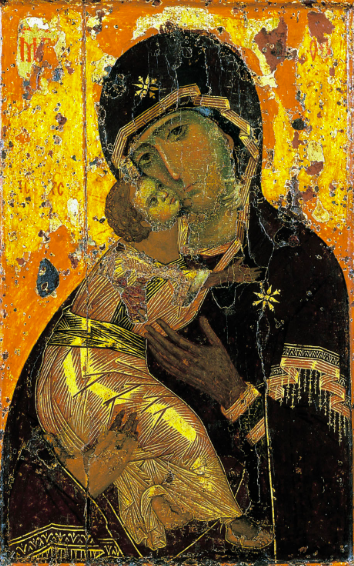
Jan. 1, 2024
There is an eighth O Antiphon used in some parts of the Church. While the first seven refer to Christ, this one refers to Mary:
O Virgin of Virgins, how shall this be?
For neither before thee was any like thee,
nor shall there be after.
Daughters of Jerusalem, why marvel ye at me?
That which ye behold is a divine mystery.
A new year is for going deep. I want to propose that this new year is for going deep through the gift of virginity. Today’s feast is a feast specifically of Mary’s virginity. God bestowed the grace of salvation, the collect tells us, through something particular: “through the fruitful virginity of Blessed Mary.” The Mother of God is ever-virgin. And this is a divine mystery.
In the Gospel on the Octave Day of Christmas we meet the shepherds again, for the first time since Christmas morning. These shepherds have grown on me over time. I think I used to think they were statues and then I found out they were people. There is something very human and specifically virginal about the shepherds. When the angels come calling, the shepherds drop everything: “Let us go now”! They go with joy, holding life lightly, ready to receive the awesome news — this is virginity of heart. They make haste to find him.
Whatever happens in this year, God, who is eternal, is already there waiting for us. Christ ascending, rising from the Tomb, hanging on the Cross, growing in Nazareth, in Bethlehem and in his Mother’s womb — he is already there. All he asks of us is that we trust him. And we can go, moving in the freedom of his eternal Now and knowing that he is already there, working our good.
To the joys you have prepared for us, and the sorrows, to the people around me, their sorrows and their joys, the Church’s sorrows and joys — to these, Jesus, we say YES! Why? Because we are heirs of the Kingdom, in whom the Spirit of the Son cries aloud, “Abba! Father!” (Second Reading)
Where does this leave us? Perhaps my favorite Christmas carol is a very old one, There is no rose of such virtue. It is about 600 years old. The original melody was sung by Sting and the text is subject to endless settings. One that means a lot to me is by Chrysogonus Waddell, OSCO, and quietly adorns the stunning final minutes of Greta Gerwig’s Lady Bird.
The last word of the carol, which alternates between English and Latin, is transeamus. It is a word Benedict XVI highlighted in one of his Christmas homilies as pope. It means not just “let us go,” but let us go across — over — out to where Jesus lies. And we do it with light-hearted, light-footed, open-handed, virginal joy:
Leave we all this worldly mirth,
And follow we this joyful birth:
Transeamus.