Garden I: Healing the Passions
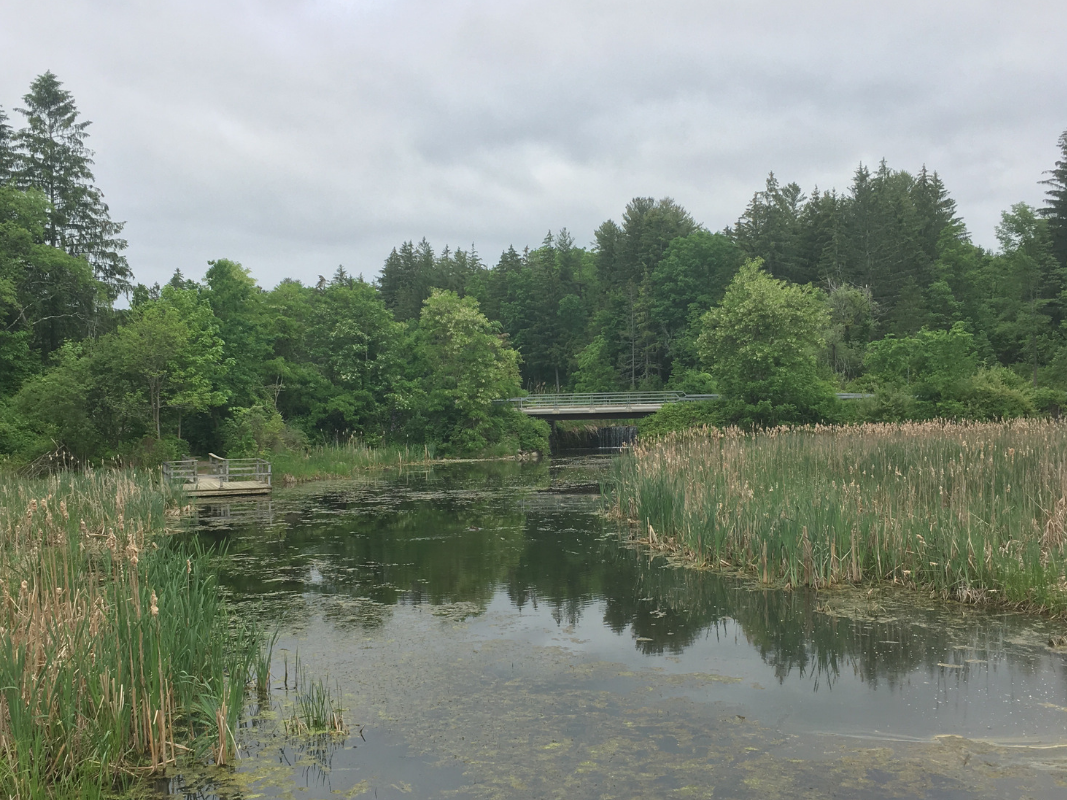
Five Rivers Environmental Education Center, Delmar, NY (source: http://newyorktrailheads.com/2019/02/09/Five-Rivers-Environmental-Education-Center.html)
“The best place to find God is in a garden.
You can dig for Him there.”
(George Bernard Shaw)
During Lent I mentioned in a homily that Lent is meant to lead us back to the Garden. Someone asked if there was more to that, which led me to collect some thoughts and quotations on three different aspects of the statement. There will be three posts on:
(1) healing the passions
(2) typology (Adam and Eve foreshadowing Christ and Mary)
(3) our return to the Garden and to our heavenly homeland
The monastic tradition sometimes gathered insights in the form of a century, 100 sayings on a given topic. This preceded the medieval catena (“chain”), most famously Aquinas’ Catena Aurea, collections of patristic and exegetical insights on passages of Scripture. They’re meant not to argue for a particular point, but to let the reader make associations and connections (David Fagerberg’s Century on Liturgical Asceticism explains this with more details). These posts draw some inspiration from that practice.
Healing the Passions
1.“The sign of man's familiarity with God is that God places him in the garden.” (Catechism of the Catholic Church, para. 378)
2. Our passions were distorted in the garden – through penance they are healed, reordered, restored. In Lent (the desert) our passions are reordered as preparation for Easter (the garden), when Jesus conquers the death through which we were expelled from the Garden. The power of His Cross and Resurrection accomplishes the reordering of our passions.
3. When our passions are reordered and restored, we become a garden – a pleasing dwelling place (Song of Songs 4:12-16, 5:1). A garden is a place where human cultivation meets God’s creation – a mini-kingdom where nature is ordered.
4. A locked garden, my sister, bride,
a locked well, a sealed spring.
Your branches, an orchard of pomegranates
with luscious fruit,
henna and spikenard,
spikenard and saffron,
cane and cinnamon,
with every tree of frankincense,
myrrh and aloes
with every choice perfume.
A garden spring,
a garden of fresh water
and streams from Lebanon.
—Arise, O north, and come, O south,
blow on my garden, let its perfumes flow,
Let my lover come to his garden
and eat its luscious fruit.
—I have come to my garden, my sister, bride,
I have gathered my myrrh with my perfume,
I have eaten my honeycomb with my honey,
I have drunk my wine with my milk.
—Eat, friends, and drink,
be drunk with loving.
(Song of Songs 4:12—5:1)